Knoxville, Tennessee · The Scruffy City
Old tunes, living rooms, and the long road from the Highlands to the Smokies.
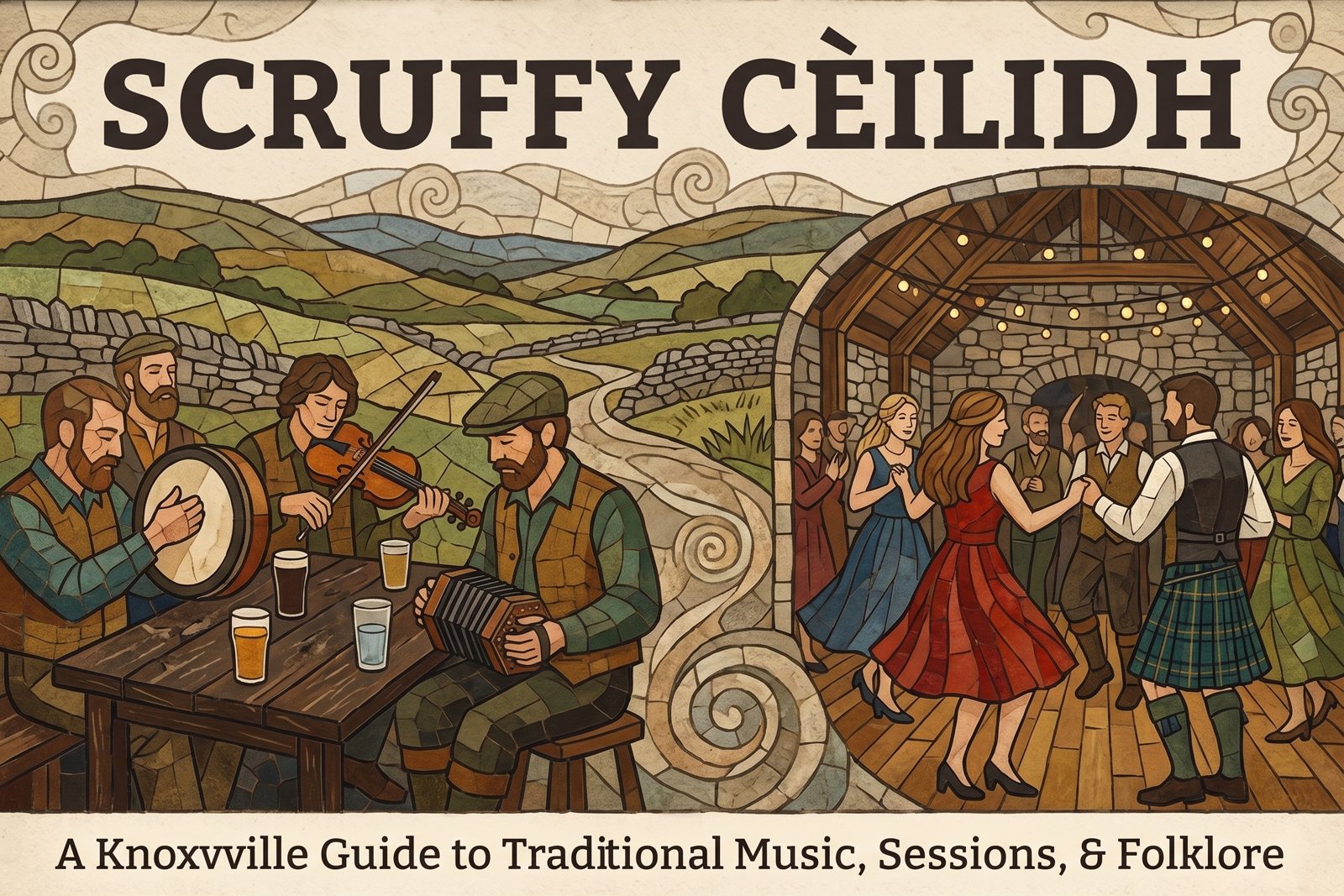
Scruffy Cèilidh is a working guide to traditional Celtic, Anglo-Celtic, and Appalachian music — the tunes, the instruments, the etiquette of a good session, and the stories that travelled with the music across the Atlantic and up into the East Tennessee ridges.
Scotland leads the room here, but it doesn’t run it. Irish reels, Northumbrian pipe tunes, Welsh and Cornish airs, Breton dances, Cape Breton strathspeys, Newfoundland shanties, and the old-time fiddling of Southern Appalachia all share the same scarred table. That mix is the point.
Start here
-
Tune archive
Reels, jigs, strathspeys, airs, and old-time breakdowns — each with plain notation, ABC you can paste into any player, and where the tune has travelled.
Browse tunes -
Session directory
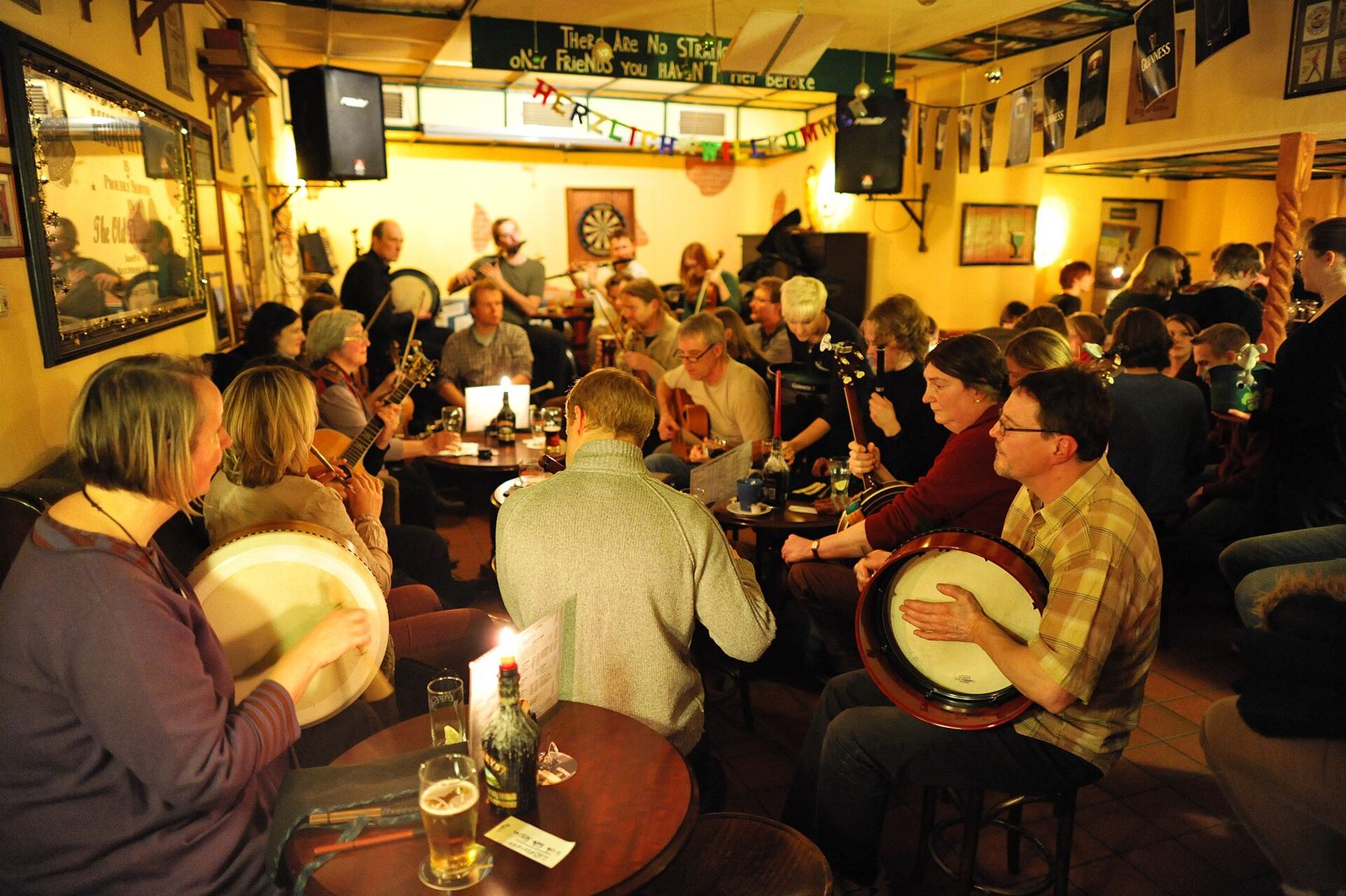
Where to play or listen in and around Knoxville, what each session is like, and the unwritten rules that keep a session friendly.
Find a session -
Instrument lore
Fiddle, bodhrán, concertina, melodeon, wooden flute, whistle, tenor banjo, clàrsach — what they are, where they came from, how to start.
Meet the instruments -
Folklore & essays
Longer reads on the people, places, and superstitions behind the music — from the Border ballads to the front porches of Cades Cove.
Read the essays
The rooms and the road

Why “Scruffy”?
In 1980, as Knoxville prepared to host a World’s Fair, a national newspaper wondered aloud what a “scruffy little city on the Tennessee River” was doing with such ambitions. Knoxville took the insult, kept it, and wore it out — the way a good session tune gets worn smooth by a thousand hands. The Scruffy City is where this project lives, and the name is a promise: no polish for its own sake, no costume, just the music and the people who carry it.
How this site is built
Every tune page carries a settings index and ABC notation so you can hear it, print it, or load it into your own tools. Session listings describe the room honestly — pace, welcome for beginners, whether singers are expected. Instrument pages start with the sound, then the history, then the first three things a beginner should buy or avoid. Essays are sourced; where we quote a collector or a singer, we say who and when.
Early preview. What you’re seeing is the shape of the site with a handful of sample entries. The archive, the directory, and the essays are being filled in through late 2026. If you run a session in East Tennessee or have a tune with a story, the About page says how to reach us.